Story 01 · Rhondda
The story under the valley
In 1851, 951 people lived in the Rhondda. By 1924, 167,000 did. This is how a quiet farming valley became one of the most important coalfields in the world, what it cost, and what was left when the pits closed.
Chapter 1 · Before 1855
Farms and woods
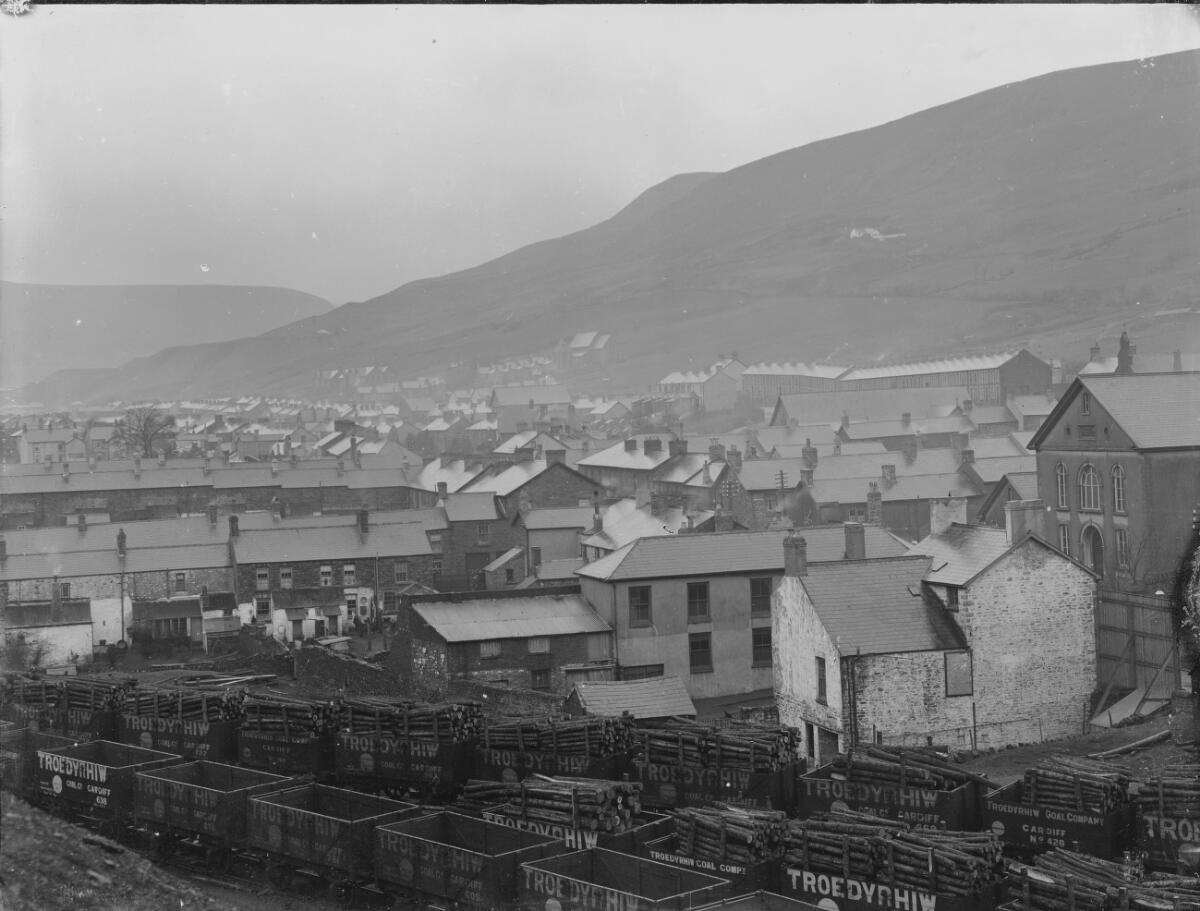
Before coal, the Rhondda was a place of farms, woodland and steep green hillsides. Hardly anyone lived here, and the people who did spoke Welsh. The head of the valley, where Treherbert stands today, was a quiet pastoral spot well off the beaten track.
Coal was already being dug in neighbouring valleys. In 1809 Walter Coffin, a 24-year-old from a family of Bridgend tanners, went looking for it on his father's land at Dinas, near the bottom of the valley. In 1812 he sank the Dinas Lower Colliery, the first deep mine in the Rhondda. Getting the coal out was slow work: it went by packhorse at first, then by tramroad to Pontypridd and on down the Glamorganshire Canal to Cardiff.
For forty years, that was about it. Then the Marquess of Bute went looking for something better.
- 1809Walter Coffin starts prospecting for coal at Dinas.
- 1812The Dinas Lower Colliery, the first deep mine in the Rhondda.
- 1845The Bute trustees buy Cwmsaerbren farm, at the top of the Rhondda Fawr, for £11,000.
- 1851A trial pit is dug there. The Rhondda has 951 people.
- 1853Steam coal is struck at 125 yards down.
Chapter 2 · 1855 to 1913
The boom
The coal at Cwmsaerbren was steam coal: hard, clean-burning and ideal for the boilers of steamships. The Bute Merthyr Colliery began producing in 1855, the first steam coal pit in the Rhondda. That January the parish records used a new name for the place for the first time: Treherbert. On 21 December 1855 the first 38 wagons of Rhondda steam coal left for Cardiff Docks.
The railway reached Treherbert the next year. The first coal in the Rhondda Fach was mined at Ferndale in 1862. After that, pits were sunk the length of both valleys, and people poured in to work them.
People living in the Rhondda
Sources: Daily Post; Encyclopaedia Britannica
Terraces climbed the hillsides. Chapels, workmen's halls, shops and schools followed. Within one lifetime the valley floor turned from fields into an almost unbroken ribbon of houses.

By 1913 the South Wales coalfield was at its peak. It produced 57 million tons of coal that year and employed more than 234,000 miners. Cardiff and Barry were the two biggest coal-exporting ports in the world.

Single companies grew huge. At Ferndale, nine pits were worked together. By 1914 they employed 5,654 men and raised 1,750,000 tons of coal a year.
Chapter 3 · The price of coal
The cost
Steam coal gives off firedamp, an explosive gas. A spark, a naked flame or a build-up of coal dust could set it off, and the explosion could tear through miles of underground roadways in seconds. The Rhondda's worst disasters each took dozens, sometimes more than a hundred, men and boys at once.
Lives lost. Counts from the time vary slightly between sources; the Rhondda Leader reported 120 dead at Wattstown.

Not every disaster was an explosion. On 11 April 1877, water from the old workings of Cymmer Colliery burst into the Tynewydd pit at Porth. Fourteen men were underground. Five died. Nine were saved, some of them after being trapped for nine days while rescuers dug through to them.
Most deaths never made the headlines at all. They came one or two at a time: roof falls, accidents with drams, accidents in the shafts. A writer at the time worked out that across Britain's mines, falls of roof killed more men each year than explosions did.
The cost was also counted in pay and conditions. In 1910 a dispute over rates for a difficult seam at the Ely Pit in Penygraig grew into a lock-out of all 800 men there. By November around 12,000 miners at the Cambrian Combine's pits were on strike. On the evening of 8 November, shop windows were smashed in Tonypandy. Police were brought in from outside the area, and soldiers followed. The men went back in October 1911, on the owners' terms.
Chapter 4 · 1920s to 1990
The closures
The boom ended almost as quickly as it began. After the First World War the market for steam coal slumped, as ships turned from coal to oil. The Rhondda depended on one industry, and when that industry shrank, so did the valley. From its peak in 1924 the population began a long fall.
In 1947 the coal industry was nationalised and the pits passed to the National Coal Board. Some were modernised: in 1949 the Board announced that Maerdy, which had been lying derelict, would be completely rebuilt. But one by one, the pits closed.
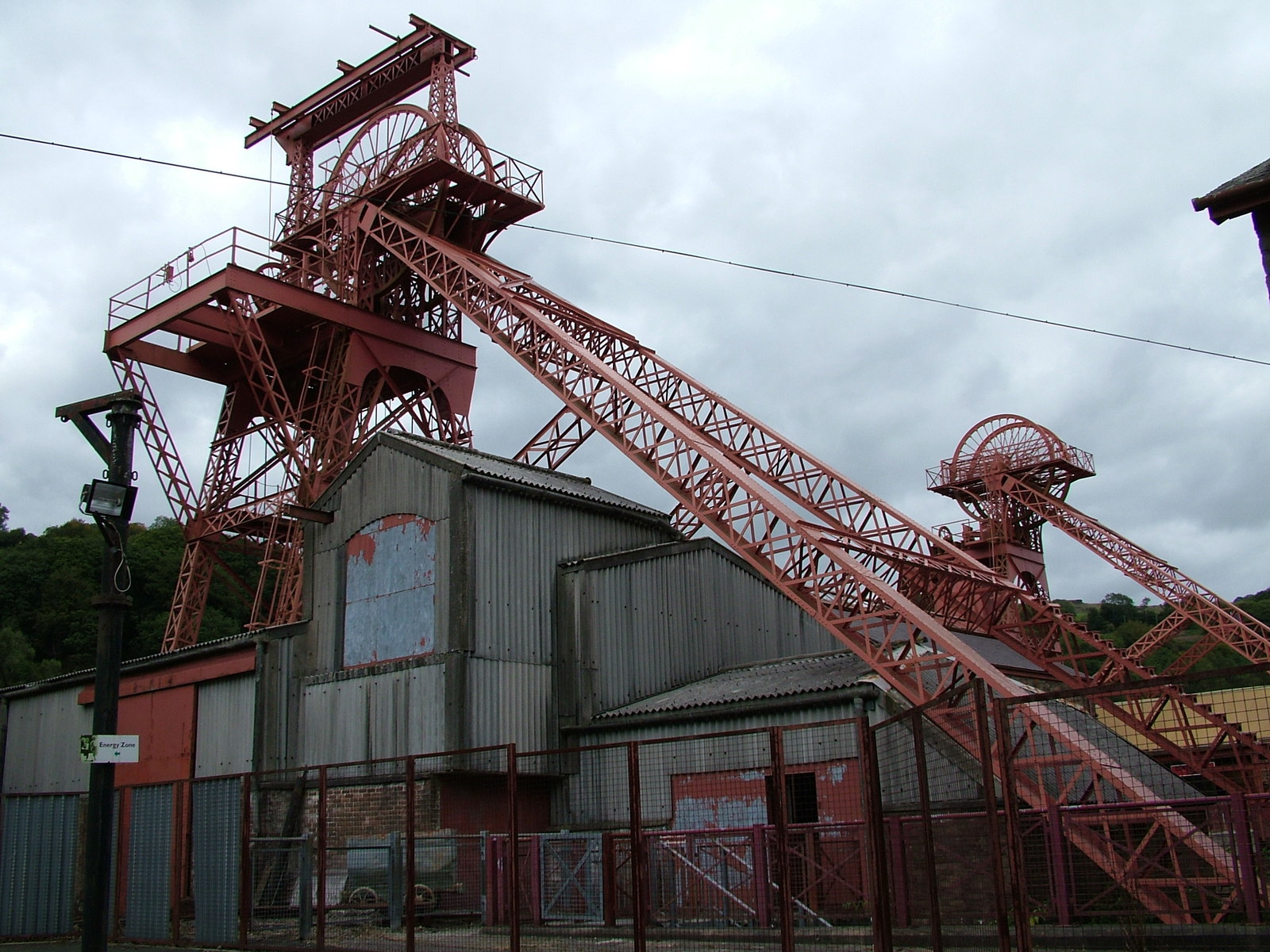
By the 1980s only a handful were left. In June 1983, Lewis Merthyr and its neighbour Ty Mawr closed, leaving just one working colliery in the whole Rhondda: Mardy, at the top of the Rhondda Fach. A year later, miners across South Wales went on strike against further closures, and stayed out from 1984 into 1985.
The last coal was wound up Mardy's shaft in 1986, though coal was still mined there for a few more years and brought out through the nearby Tower drift mine. On 21 December 1990, Mardy closed. It was the last pit in the Rhondda.
Chapter 5 · Today
What's left
Most of the pits have gone without a trace. The tips have been landscaped, and the hillsides above the terraces are green again. Some of what was underground is still there, though, if you know where to look.
Lewis Merthyr at Trehafod became the Rhondda Heritage Park in 1987. Its Bertie and Trefor shafts, named after the owner's two sons, still stand, and it is one of the best-surviving collieries in South Wales. Former miners lead visitors underground.

The valley never got back to its old size. In 2011 the built-up area along the valley floor was home to 62,545 people, a little over a third of the Rhondda at its peak. And the language changed too: in 2021, 12.4% of people across Rhondda Cynon Taf could speak Welsh.
The terraces, the chapels, the institutes and the rugby clubs are still here. So are the families who worked underground. That is what this story is really about.
Got a photo or a story?
If you have a photograph, a document or a memory of the Rhondda pits and you'd be happy to share it, we'd love to hear from you: helo@dandaear.co.uk
Every figure on this page is sourced. See the sources and image credits.